Sandra Auderset ☕️

Sandra Auderset

(she/her)

Postdoctoral Researcher in Linguistics

Department of Linguistics, University of Bern

About me

I research how languages diversify over time and how we can trace and explain diversification. I work on tone and sound change, subgrouping, and person marking, with a focus on Mixtecan (Mexico). I combine quantitative methods and data-driven comparison with detailed analyses of individual varieties. To develop the empirical foundations needed, I conduct long-term fieldwork on Mixtec and Cuicatec varieties and develop openly available cross-linguistic resources.

I’m currently a postdoctoral researcher in the Department of Linguistics at the University of Bern. I have a PhD in Linguistics from the University of California, Santa Barbara (USA) and the Department of Linguistic and Cultural Evolution at the Max Planck Institute for Evolutionary Anthropology in Leipzig (Germany). My dissertation is a collection of three articles on Mixtec(an) language history using qualitative and quantitative methods.

News and updates:

  • I got a Firebird Research Grant for continuing the documentation of Santos Reyes Pápalo Cuicatec
  • November 2026: I will give a talk at the Transalpine Typology Meeting in Munich on Mixtec pronouns and classifiers
  • August 2026: Co-hosted a workshop on Microtypology at SLE with Linda Konnerth and Sergey Say
  • July 2026: I contributed to a position paper on language documentation infrastructure (/publication/gessler-2026-the-missing)
  • April 2026: New database paper out in Journal of Open Humanities Data

Education

PhD in Linguistics

2022

University of California Santa Barbara

MA in General Linguistics

2015

Universität Zürich

BA in General Linguistics and Comparative Indo-European Linguistics

2013

Universität Zürich

Interests

Language change and language history Quantitative methods Diachrony of tone Community-centered language documentation Diachronic typology
Research
Mixtec Sound Change Database featured image

Mixtec Sound Change Database

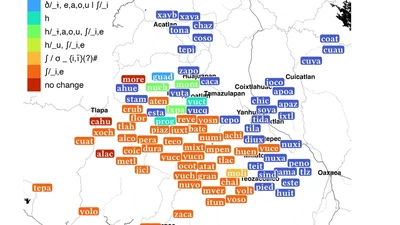
This database provides a comprehensive archive of Mixtec sound changes from 105 contemporary varieties, coded with a common methodology. It now also includes tone change for 42 …

Mixtecan Cognate Database featured image

Mixtecan Cognate Database

This database contains lexical entries from 137 Mixtecan languages, which are cognate coded by language experts including myself and standardized to IPA. It is a work in progress …

Documentation and description of Tù'un Na Ñuu Sá Matxí Ntxè'è (San Martín Duraznos Mixtec) featured image

Documentation and description of Tù'un Na Ñuu Sá Matxí Ntxè'è (San Martín Duraznos Mixtec)

A community-based documentation and description of Tù'un Na Ñuu Sá Matxí Ntxè'è (San Martín Duraznos Mixtec) including pedagogical materials

Constituency and Convergence database featured image

Constituency and Convergence database

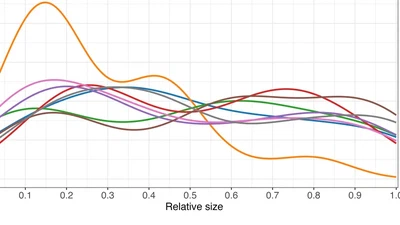
The Constituency and Convergence database (CCDB) is a typological database that contains planar structures and results of constituency tests applied across multiple languages with …

Dissertation featured image

Dissertation

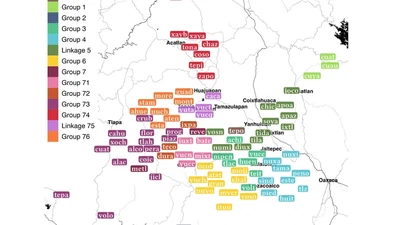
Quantitative approaches to dialect area subgrouping and tone change in Mixtec(an)

Publications
Talks
Teaching

Linguistic Data Analysis using R

Description: This class introduces the conceptual background and methodology for creating, annotating, cleaning, and analyzing linguistic data sets and databases using the programming language R (with tidyverse). It covers database design principles, how to read in and clean data sets, and visualizations (including maps), as well as good coding practices with reproducibility and reusability in mind.

Anthropological Linguistics

Description: This class provides an introduction to Anthropological linguistics, the study of human language in its social and cultural context. We examine theories on universalism and relativism and discuss their impact on the study of language with a focus on endangered languages. The course covers core concepts in anthropological linguistics such as kinship, politeness, color, and space. Further guiding questions concern the mechanisms by which culture might shape language, the universality of such processes and how much they can vary depending on context.

Statistics for linguistics using R

Description: This class provides an introduction to data exploration and descriptive and inferential statistics with a focus on applications in (comparative) linguistics using the programming language R. Topics include: frequentist versus Bayesian statistics; linear, logistic, and multilevel models; clustering and random forests; and other statistical analyses depending on the participants’ interests.

Introduction to Morphosyntax

Description (in German): Dieser Kurs behandelt die Grundlagen der Morphosyntax, indem Konzepte der Morphologie, der Syntax, und der Interaktionen beider Disziplinen als Einführung vorgestellt werden. Die Studierenden lernen, Konzepte wie Koordination und Rekursion auf Wort- und Satzebene als ähnlich zu begreifen, und einen ersten Anblick in die Struktur von Sprache erhalten.

Quantitative Methods for Typologists Using R

Teach-In at the 14th Conference of the Association for Linguistic Typology, UT Austin, Dec. 2022

Teach-In for conference participants at the ALT2022 taught by Sandra Auderset, Olena Shcherbakova, and Adam Tallman. The code and materials for “Quantitative Methods for Typologists Using R” teach-in can be found on GitHub.

Contact
Sandra Auderset
Department of Linguistics, University of Bern
Office B163, Länggassstrasse 49, 3012 Bern, Switzerland
✉️ sandra.auderset@unibe.ch